

Uncategorized
Ballpoint Pen vs Rollerball: What Sets Them Apart – and Where Each Excels
One of the questions we are asked most frequently is: Which is better – a ballpoint pen or a rollerball? The answer is not straightforward, as both writing instruments offer distinct advantages and are suited to different uses. Ultimately, the key is which model best complements your individual style and working day.
Both rollerballs and ballpoint pens are firmly established in the world of fine writing instruments. While the ballpoint pen is known for its durability and reliability, the rollerball impresses with its smooth writing feel and elegant line.
In this article, we compare both writing instruments in detail and show how they differ and when each pen is the better choice. Whether you value aesthetics, comfort or practicality, you will find the ideal solution for your writing style here.
How they work: ink reaches the paper via a small ball
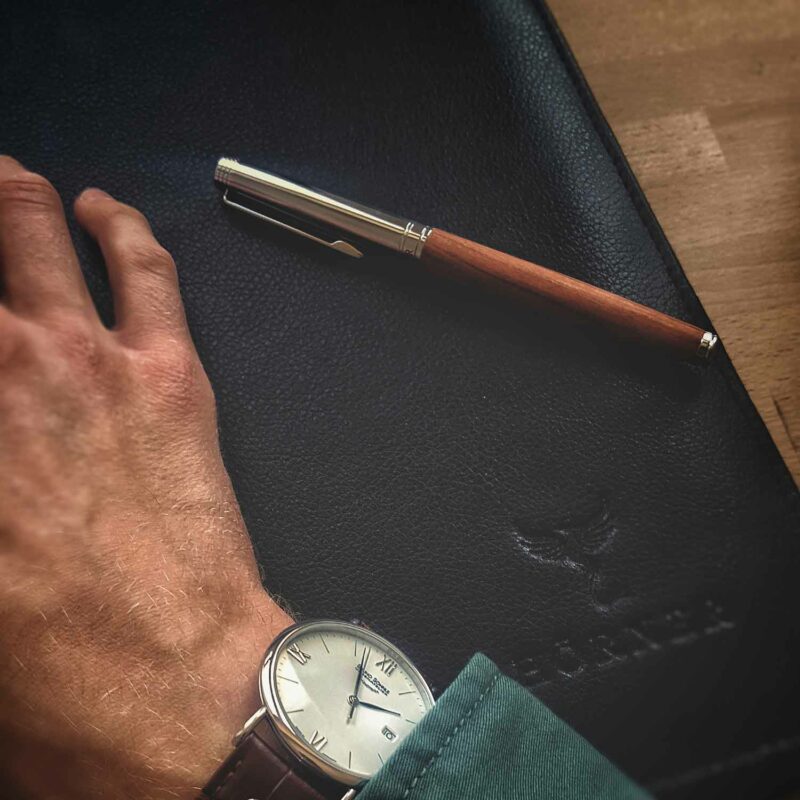
Both writing instruments work according to the same basic principle: a small ball in the tip transfers the ink from the refill onto the paper. However, this is also where the greatest difference lies, as the consistency of the ink largely determines the writing feel.
The rollerball uses water-based ink, which is thinner and flows more easily through the ball onto the paper. This creates a soft, gliding writing experience, similar to that of a fountain pen. As a result, less pressure is needed, making writing more comfortable.
The ballpoint pen, by contrast, uses an oil-based, more viscous ink that does not flow from the refill as quickly. This requires more pressure when writing, but ensures a consistent line that adheres to almost any surface. Ballpoint ink also dries more quickly, making smudging almost impossible.
Design and materials: metal stands for quality and durability
A high-quality writing instrument is defined not only by its functionality, but also by its choice of materials and finish. While simpler models are often made from plastic, premium ballpoint pens and rollerballs feature metal barrels in stainless steel, brass or aluminium. These materials offer a pleasing feel, balanced weight and strong resistance to everyday wear.
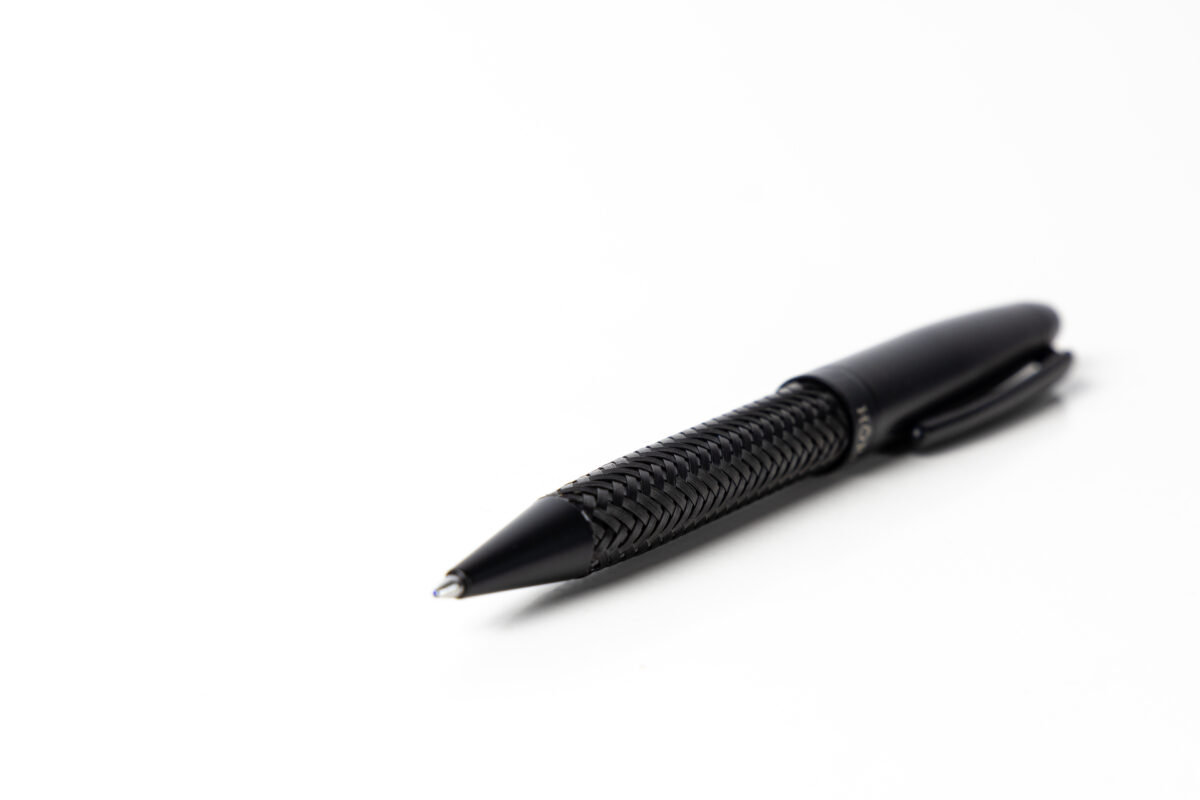
Ballpoint pens are often available with a twist or click mechanism, allowing the refill to be extended and retracted with ease. Rollerballs, on the other hand, usually feature a protective cap, which helps prevent the refill from drying out and enhances the pen’s elegant appearance.
Particularly in a business setting, metal writing instruments are a mark of quality and refinement. They sit comfortably in the hand, look professional and leave a lasting impression at important meetings or when signing contracts.
Ink: water-based vs oil-based
The choice of ink is one of the defining differences between rollerballs and ballpoint pens.
-
Rollerballs use water-based ink, which is absorbed into the paper more quickly and provides a smooth writing feel. The result is a soft, even line. The drawback: on lower-quality paper, the ink may feather or bleed through.
-
Ballpoint pens use an oil-based ink, which is more viscous and dries more slowly. This creates a clean, precise line without smudging or leaking. In addition, the ink is often water-resistant, making the ballpoint pen a preferred choice for important documents.
Handwriting and line width: a wide choice of tip sizes
The more fluid ink of rollerballs closely resembles that of fountain pens. And these are prone to smudging. Rollerballs are generally superior to fountain pens in this respect, and their ink dries a little more quickly, which means the risk of smudging is lower. Even so, they do not come close to ballpoint pens, whose more viscous ink dries virtually at once and hardly smudges at all.
The consistency of the ink also affects the appearance of the writing. With a ballpoint pen, the line width remains relatively constant on the paper, which means the ink does not spread after writing. With a rollerball, it is different: the paper absorbs the ink and it “bleeds”, as experts describe it. The result is that even if you write with a very fine refill, the line produced will be slightly broader.
Speaking of line width, both types of pen are available with different refill sizes. The balls in rollerball tips generally have a diameter between 0.7 mm and 1.2 mm. Particularly fine refills are also available with a ball diameter of 0.2 mm. Our Hörner rollerballs are offered with a medium line width of 0.7 mm.
Ballpoint refills are, on average, slightly broader and usually range between 0.7 mm and 1.4 mm, although particularly fine refills from 0.2 mm are also available here. In our blog article “How to Find the Perfect Ballpoint Refill”, we explain what to look for when buying one.
Writing style: frequent writers often prefer the rollerball
Because the more fluid ink of rollerballs flows more easily onto the paper, writing itself also feels easier. You do not need to press the pen down as firmly as you would with a ballpoint pen. For that reason, those who write a great deal often prefer a rollerball – or, for example, a fountain pen, which is particularly well suited to composing a handwritten letter.
Rollerballs are also becoming increasingly popular with beginners. As they offer a similarly pleasant and relaxed writing experience to fountain pens, but with the considerable advantage of not scratching, many pupils are happy to choose this type of pen.
Refills: simple replacement for lasting use
At Hörner writing instruments, quality and sustainability are central considerations, which is why all of our ballpoint pens and rollerballs are equipped with replaceable refills. Thanks to standardised refill formats, our writing instruments can be refilled with ease, allowing them to remain trusted companions for many years.
Whereas with inexpensive writing instruments, particularly some rollerballs, the refill is permanently built in and cannot be replaced, Hörner relies on thoughtful construction that allows the refill to be changed in seconds. In other words, when the ink is used up, there is no need to discard the entire pen – a clear advantage for environmental awareness and longevity.
Another factor is the writing range: while our rollerball refills provide a fluid writing experience with a range of up to 1,500 metres, our ballpoint refills achieve an impressive up to 10 kilometres of writing performance. Thanks to the efficient ink usage of our refills, you benefit from consistently high-quality writing without needing frequent replacements.
With Hörner writing instruments, you are choosing not only stylish elegance, but also sustainable functionality – as each of our models is designed for long-term use through replaceable refills.
Conclusion
It is impossible to declare one definitively better: the ballpoint pen or the rollerball. There are, of course, differences between the two, but these simply mean that each is suited to different purposes.
Rollerballs are popular with frequent writers because the ink glides so fluidly across the paper, making it easy to write longer texts without strain. Rollerballs are also increasingly chosen by beginners.
Ballpoint pens impress with an exceptionally long writing range per refill and clean writing without smudging. They are, and remain, the indispensable pen for everyday use.
Our high-quality sets of ballpoint pens and rollerballs are perfect for anyone who does not wish to forgo the individual advantages of either pen.