

Uncategorized
A guide to nibs from A to XF: choosing the right fountain pen nib
Anyone wishing to write with a fountain pen will inevitably face the question of which nib to use. There are, in fact, many different nibs, which differ less in the material they are made from than in their nib grade or nib width.
The market for fountain pen nibs is highly diverse and readily offers a dozen different nib types. You do not need to know all of them for everyday use. However, a basic understanding is helpful if you want to understand manufacturers’ codes and buy the right nib for the intended purpose.
This blog post is a concise guide to nibs from A to XF – so that you can find the right nib for your fountain pen.
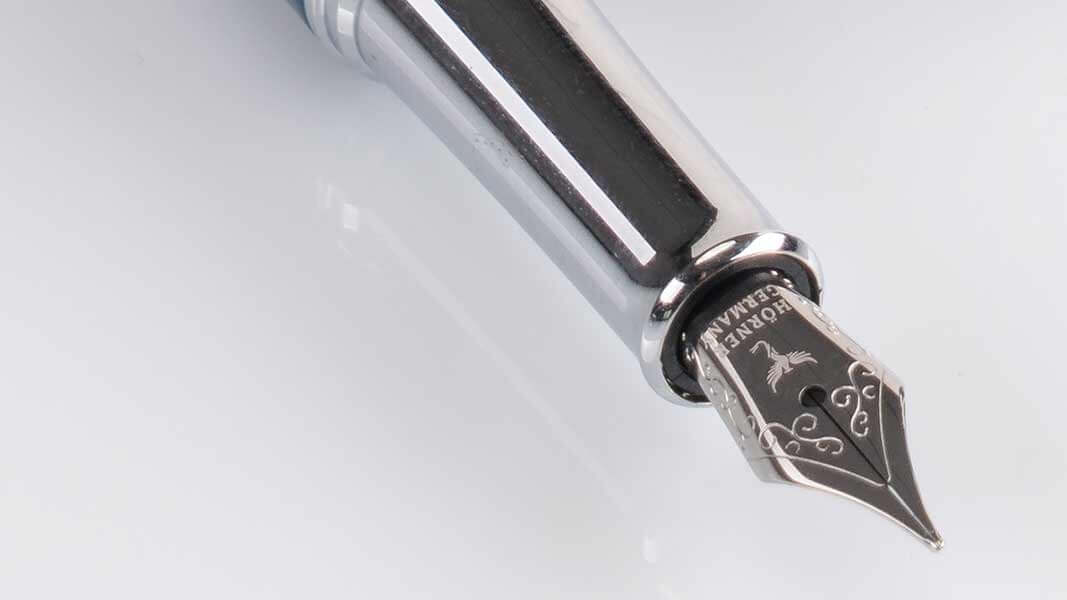
Understanding the codes: these nib grades are available
Manufacturers supply fountain pens with different nib grades. Most buyers, whether purchasing a fountain pen for their child or for themselves, give this little thought. Yet they should, as the nib is the heart of every fountain pen.
The most common nib grades you will typically find in stationers are A and M.
A nibs are intended for beginners. They are made of stainless steel and are particularly robust. Inexperienced writers generally find them very easy to use, which is why this nib type is usually recommended for primary school pupils.
M nibs have a medium nib grade. This is a standard nib width that allows for comfortable, effortless writing over longer periods. M nibs are true all-rounders for everyone. The One and Terra fountain pens available from us are therefore fitted with M nibs, which produce a line width of 0.6 mm.
Beyond that, depending on your needs, you may also be interested in nibs in the F (fine) and B (broad) categories, two other widely used nib grades. There are also many line widths in between, adding further nuance to the choice of nibs. An overview:
- F (fine): F nibs are chosen by experienced writers with a delicate handwriting style.
- B (broad): The line is somewhat broader than with the standard M nib, making this nib suitable for larger handwriting.
- LH (left-handed): Left-handed nibs are a category in their own right. These are M nibs with a special slant, designed to suit the needs of left-handed writers. They are made of stainless steel and are therefore just as robust as A nibs for beginners, which makes them suitable for those just learning to write.
- EF or XF (extra fine): These nibs write even more finely than F nibs and are suitable only for experienced writers. They are often used for fine embellishments. For conventional writing, they are less suitable, as they can feel rather scratchy.
- BB (extra broad): The line produced is broader still than that of B nibs. Very few people use BB nibs for general writing. Instead, they are primarily found on pens intended for signatures.
There are also many other nib types, although not every manufacturer offers every type. You may, for example, come across OM, OB and OBB nibs, which are medium, broad and extra broad nibs with a left slant. They can help compensate for a slightly angled hand position when writing.
Stay fully up to date with our newsletter
And receive a 5% discount voucher for your order as a thank-you
[cleverreach form=275818]No uniform standards for different nibs
There is, however, one difficulty: neither the terms used for nib grades nor the resulting line widths are standardised. This means that each manufacturer can define its own values – which is why we recommend paying close attention when purchasing to the line width specified by the manufacturer (with us, you will find this information in the product description for every Hörner fountain pen).
It is entirely possible that an F nib from one manufacturer would already be considered an M nib by another brand. Where possible – and especially if no exact line widths are stated – you should carry out a writing test before purchasing a particular nib, so that you can judge for yourself whether the model has the desired characteristics.
Changing nibs as needed: the right nib for every purpose
Anyone who uses their cartridge fountain pen, piston fountain pen or converter frequently and for very different purposes is unlikely to want to limit themselves to a single nib. The wide range of different nibs makes it possible to change nibs as required. This is straightforward with many fountain pens, though not with all of them.
Specialist nibs can also be fitted to a fountain pen. These are either made from a particular material or designed in such a way that they are intended for a very specific kind of use. Specialist retailers offer calligraphy nibs with a flat tip (instead of the usual “tipping”, a spherical tip made of iridium), gold nibs (for that distinctive touch, whereas nibs are normally made of rust-resistant steel or stainless steel), and even music nibs (with two slits).
In brief: what to bear in mind when buying a nib
- If you are looking for an all-round nib, an M nib is the best choice, as supplied as standard with Hörner fountain pens.
- When buying a nib, pay attention to both the nib grade and the line width, as these can vary from one manufacturer to another.
- Choose the right nib for the intended purpose: B or BB nibs for signature pens, F or EF/XF nibs for very smooth and fine writing. LH fountain pens are designed specifically for left-handed writers.
You are currently viewing placeholder content from Standard. To access the actual content, please click the button below. Please note that doing so will share data with third-party providers.