

Uncategorized
Rollerball or Fountain Pen? Find the Perfect Writing Instrument for Your Success
Choosing the right writing instrument is often a matter of personal writing style and intended use. While the fountain pen is appreciated for its refined aesthetics and traditional writing feel, the rollerball pen offers a modern alternative with excellent writing comfort. But which writing instrument suits you best? In this article, we compare both options and highlight their respective advantages and disadvantages, helping you make the perfect choice for your writing style.
Writing instruments are more than mere tools – they are an expression of personality, style and professionalism. Whether in meetings, when drafting important documents or taking creative notes, choosing the right pen can significantly influence the writing experience. It is therefore worth taking a closer look at the differences between rollerball pens and fountain pens.
How they work: ball tip vs nib
Both rollerball pens and fountain pens were designed to provide a pleasant writing experience, yet the way they function differs considerably.
-
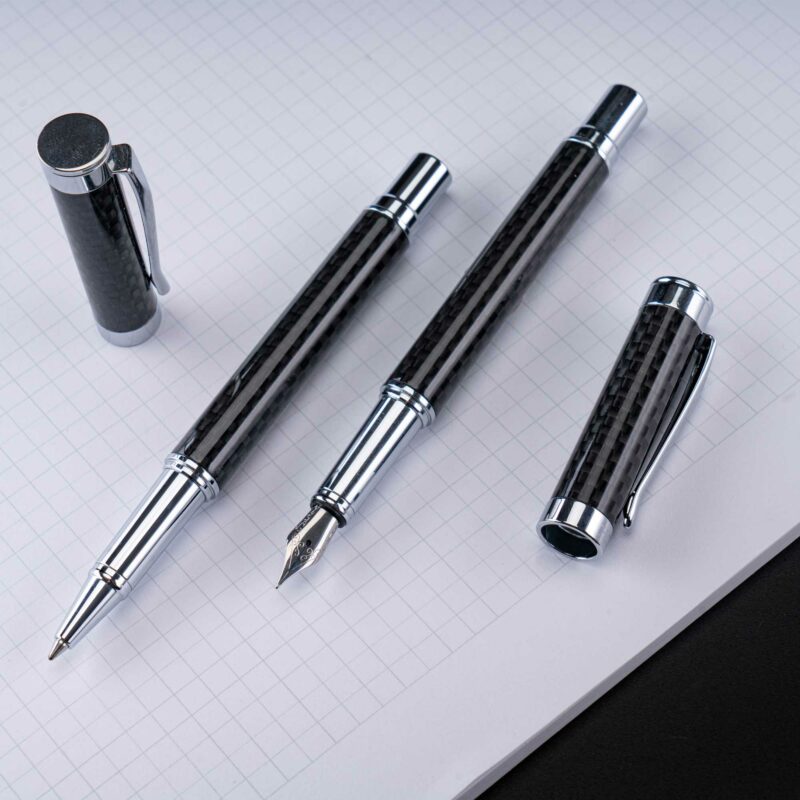
Rollerball pen: Similar to a ballpoint pen, the rollerball uses a small ball in the tip to transfer ink evenly onto the paper. Its water-based ink creates a soft, fluid writing feel with very little resistance. This allows for effortless writing and a pleasingly consistent line.
-
Fountain pen: The fountain pen releases ink via a metal nib that is in direct contact with the paper. Line width can be influenced by writing pressure, producing a particularly individual style of handwriting. Depending on nib width and flexibility, the writing experience can vary considerably.
While the fountain pen offers greater control over line variation, the rollerball provides a more effortless writing feel that is especially well suited to longer writing sessions. Those who value smooth, consistent writing will often be happier with a rollerball, while admirers of classic handwriting may prefer the fountain pen.
Find out more about what a rollerball pen is.
Writing comfort: elegance vs ergonomics
When writing, not only the appearance of the script matters, but also comfort. A well-balanced writing instrument can ease strain on the hand and make writing more enjoyable.
-
Rollerball pen: Thanks to its free-flowing ink, the rollerball is especially comfortable for those who write a great deal. It requires only minimal pressure, so the hand tires less quickly. Anyone who writes long texts or takes frequent notes benefits from the ergonomics of a high-quality rollerball.
-
Fountain pen: The nib glides smoothly across the paper, although a short familiarisation period is usually needed. A fountain pen also requires a more precise hand position to apply the ink evenly. The writing feel is softer, but not everyone adapts immediately to the flexibility of the nib.
A rollerball pen is exceptionally well suited to everyday use, as it can be used quickly and with ease. The fountain pen, by contrast, is ideal for style-conscious writers who place particular value on a classic writing experience. Anyone who writes at length on a regular basis should therefore consider whether a rollerball may be the better choice.

In short: A rollerball uses liquid or gel ink in a sealed cartridge — smooth, consistent, zero maintenance. A fountain pen draws ink through a metal nib from a bottle or cartridge — variable line, richer character, but needs regular cleaning. Pick a rollerball for daily reliability; pick a fountain pen for expressive writing and lower long-term ink cost.
| Feature | Rollerball | Fountain Pen |
|---|---|---|
| Ink type | Liquid or gel cartridge | Liquid, bottled or cartridge |
| Line quality | Consistent, smooth | Variable, expressive |
| Drying time | ~3–5 sec | ~10–20 sec |
| Maintenance | Zero | Regular cleaning |
| Refill cost | €2–5 per cartridge | €0.10–0.30 per ml (bottled) |
| Travel-friendly | Very — no leaks | Risk at altitude |
| Line width | Fixed (F/M/B) | Customizable via nib |
| Best for | Daily notes, travel | Signatures, journaling, craft |
Ink and document permanence
A key aspect of this comparison is the type of ink used and its properties.
-
Rollerball pen: Uses water-based ink, which is absorbed quickly by the paper. This ensures a clear writing result and rapid drying – particularly practical for left-handed writers, as there is hardly any smudging. However, water-based ink is not document-proof, as it may run when exposed to moisture. For official documents or contracts, specially certified inks or alternative writing instruments are therefore better suited.
-
Fountain pen: Works with special fountain pen ink, which may dry more slowly depending on the formula. Some inks are water-soluble, meaning the writing may fade or smudge over time. In addition, the choice of ink can significantly influence ink flow – some fountain pen inks are pigmented and document-proof, while others are better suited to creative purposes.
For official documents or contracts, fountain pens with document-proof ink or special ballpoint pens with certified, water-resistant ink are the better choice. As the water-based ink in a rollerball pen is not water-resistant, it can run when exposed to moisture and is therefore less suitable for long-term archiving. Even so, the rollerball offers clear advantages in everyday use: it provides a soft, fluid writing experience and is an excellent alternative for frequent writers who prefer a high level of comfort. Those seeking creative freedom and wishing to experiment with different ink colours, on the other hand, are well advised to choose a fountain pen, as there is a wide range of special inks available, whether water-resistant or artistically versatile.
Maintenance and handling
-
Rollerball pen: Requires very little maintenance. Refills are easy to replace and there are no ink stains. A clear advantage for anyone who prefers uncomplicated solutions. A rollerball also does not need regular cleaning, as the ink remains enclosed in the refill. Even with occasional use, a rollerball rarely dries out, meaning it is ready whenever needed.
-
Fountain pen: Cleaning is essential, particularly with cartridge fountain pens. If not used regularly, the ink can dry out, making more extensive cleaning necessary. High-quality fountain pens must also be cared for regularly to ensure consistent ink flow. This means the writer must flush the nib and refill the ink from time to time. Anyone using different ink colours must clean the nib especially carefully to avoid colours mixing.
Another important consideration is refillability and longevity: while rollerball refills are often standardised and easy to replace, fountain pens offer a longer-term solution through ink cartridges or piston converters. This does, however, mean that handling liquid ink requires a certain degree of experience and may result in stains on hands or paper.
Anyone seeking an uncomplicated writing instrument will usually be more satisfied with a rollerball pen. It is low-maintenance, easy to refill and ready to use immediately. Those who take pleasure in traditional writing culture and appreciate the individuality of their writing instrument, however, may enjoy a truly distinctive writing experience with a fountain pen. For style-conscious writers, the greater maintenance required by a fountain pen can nevertheless be worthwhile, particularly if they value aesthetics, different ink colours and flexible penmanship

Conclusion
Choosing between a rollerball pen and a fountain pen is not merely a question of writing feel, but also a decision about style, precision and efficiency. A writing instrument is a daily companion that should offer far more than simple functionality – it should inspire and bring pleasure to the act of writing.
Whether you prefer a smooth, effortless writing experience or are drawn to the artistry of writing with a nib depends on your individual expectations. Choose with intention – for the right tools are an expression of your personality and your success.
The right choice for your success
Whether in professional life or in personal settings, the right writing instrument is more than a practical aid; it is a sign of success, assurance and style. Both rollerball pens and fountain pens have their strengths, but which model suits you best depends on your individual needs.
✔ For swift, comfortable everyday use: Rollerball pen – ideal for meetings, quick notes and long writing sessions, as it glides effortlessly across the page and requires very little maintenance.
✔ For elegant signatures and a traditional writing style: Fountain pen – refined aesthetics with a writing result that can be tailored to the individual.
✔ For frequent writers: The rollerball pen offers a consistent writing feel with less fatigue.
✔ For admirers of classic handwriting: The fountain pen allows for a distinctive, expressive script.
Your writing instrument as an expression of style and success
Ultimately, the decision depends on personal preferences and intended use. Those who value elegance and wish to savour the act of writing will appreciate the fountain pen. Those seeking a flexible, practical solution for everyday use, by contrast, are exceptionally well served by a rollerball pen. Both writing instruments have their place – what matters is which best suits your personal writing habits and needs.
A high-quality writing instrument is more than a tool – it is a symbol of ambition, style and excellence. It lends weight to your words, underscores your assurance and makes a clear statement about your standards of quality and success. Whether you are sealing contracts with decisive signatures or setting your thoughts down on paper with precision, a refined rollerball or an elegant fountain pen helps you express your personality and your success with visible distinction.
Further information
Further information on this topic can be found in our detailed comparison: Fountain Pen or Ballpoint Pen? – The Comprehensive Test. If you are unsure which writing instrument suits you, you may also wish to read our article: Ballpoint Pen or Rollerball? – Which Is the Better Choice?.