


Uncategorized
Piston filler or converter: which system is better?
Cartridge fountain pens, piston fillers, converters: anyone who delves a little deeper into the world of fountain pens will inevitably encounter these three terms. Behind them lies the question of how a fountain pen is filled with ink, as they refer to three different filling systems, each with its own advantages and disadvantages.
In this blog post, we would like to compare the three types and explain their respective strengths, as well as which type of fountain pen is best suited to particular uses. This allows each writer to decide whether they would like to buy a cartridge fountain pen, a piston filler or a converter.
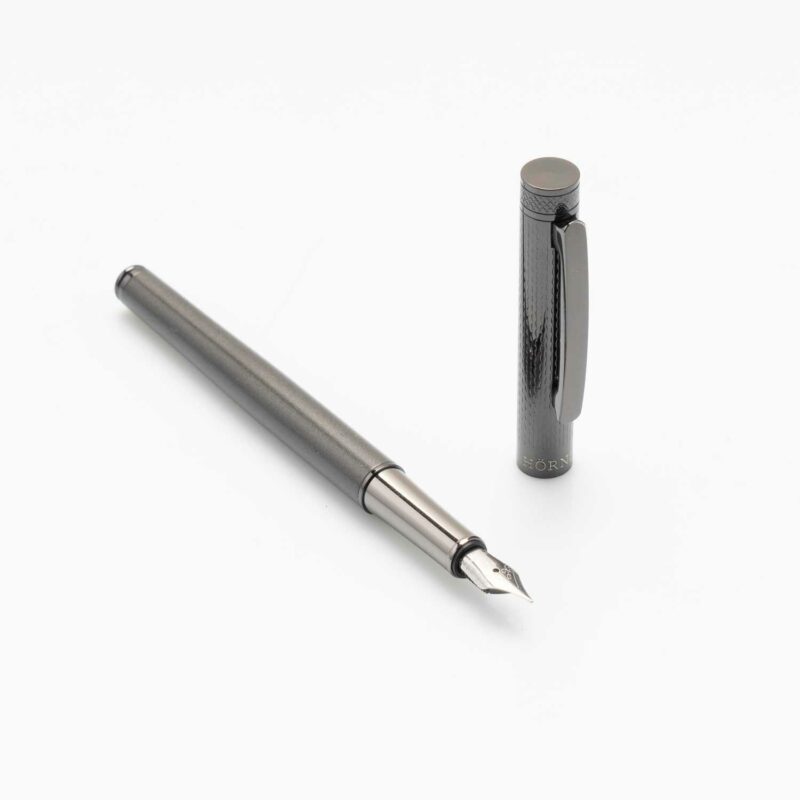
What is a piston filler – and how does it differ from a cartridge fountain pen?
Most of us will already have come across one of the three fountain pen types mentioned above during our school years: the cartridge fountain pen. It takes an ink cartridge, which then supplies the required amount of ink for a certain period.
A piston filler works on broadly the same principle. However, the ink is not provided by a cartridge, but by a piston mechanism.
The key difference is this: cartridges are generally single-use systems that are used once and then discarded, and they only work with the ink supplied inside them. Pistons, by contrast, are reusable systems that can be filled individually with the ink of your choice. In a sense, these pistons can also be described as refillable cartridges.
Stay fully up to date with our newsletter
And receive a 5% voucher for your order as a thank-you
[cleverreach form=275818]How does a piston filler work?
Piston fillers are – although many of us may associate this more readily with cartridge fountain pens – the true archetype of the fountain pen. They have been around for roughly 100 years and symbolise modern writing with nib and ink.
The principle is a little technical, but not especially complicated: a piston mechanism is built in and turned, creating a vacuum. This draws in the ink and feeds it via the feed to the nib and then on to the paper.
This entire mechanism is permanently integrated into the pen and therefore forms a single unit. Depending on the model, individual parts can still be taken apart, which is particularly helpful when cleaning the piston.
What is a converter fountain pen?
Alongside cartridge fountain pens and piston fillers, there is also a third type of fountain pen: the converter fountain pen. It sits between the other two types. With the help of a converter, a cartridge fountain pen becomes a piston filler, because the converter is ultimately nothing more than a piston that can be inserted into a cartridge fountain pen in place of an ink cartridge.
Like piston fillers, converters can be filled with practically any ink and are relatively easy to clean. They are ideal for writers who enjoy using different types and colours of ink and want to use their own bottled ink, while still preferring a cartridge fountain pen.
How do you use a converter?
A piston converter works on the same principle as a classic piston filler. The ink is filled manually into the reservoir, namely the converter or piston itself, and the converter is then simply screwed on to or inserted into the cartridge fountain pen.
When buying one, however, it is important to ensure that the converter fits the fountain pen, as some manufacturers use their own sizes. Hörner converters are, of course, compatible with Hörner fountain pens.
These are the many advantages of piston converters
The benefits of converters are plain to see: they offer users considerable flexibility, variety in ink choice, and combine the two most common filling systems. Yet that is far from all:
- Huge choice of inks: Anyone who converts their cartridge fountain pen into a converter fountain pen gains access to the widest possible selection of inks from all manufacturers. Alongside classic standard cartridges, they can fill the converter with virtually any kind of ink and enjoy an almost limitless range of colours.
- Quick ink changes are possible: Anyone who likes to vary ink colour or type frequently, for example when writing a letter, can switch between different inks much more easily with a converter. The amount of ink can also be adjusted. While it is not advisable to attach and remove traditional plastic cartridges too often in order to change between different inks, this is no problem at all with a converter.
- Sustainable and better for the environment: Converters help to reduce plastic waste. Because they can be reused, fewer disposable cartridges are needed.
- Easy cleaning: Converters can be cleaned effortlessly after each use and, thanks to their lower complexity, generally even more easily than piston fillers. Simply remove the converter and hold it under running water. This cleans the ink reservoir and helps protect the feed from deposits at the same time.
In brief: how piston fillers, cartridge fountain pens and converters differ
In many respects, the differences between cartridge fountain pens, piston fillers and converters are slight; in other respects, however, they are highly significant when you want to buy a fountain pen. The overview below shows what defines each of the three types.
- Writing result: The filling system has no influence on the act of writing itself. All three types of fountain pen are equally suitable for different applications and therefore for writing with a fountain pen.
- Ink selection: Cartridge fountain pens offer the smallest choice of inks, while converters offer the greatest. Users of cartridge fountain pens can only insert the appropriate cartridges (unless they choose to use a converter), whereas writers using piston fillers have access to the full range of available inks, which they can simply fill into the piston. And anyone wishing to buy a converter can benefit from both options: cartridges and bottled ink for piston filling.
- Ease of use: Cartridge fountain pens are naturally the easiest to use, as they are not particularly complex. The cartridge is used only once, so no cleaning is required. Converters and piston fillers, by contrast, offer more possibilities and therefore require a little more care. To avoid deposits and ensure a consistently clean writing experience, they need to be cleaned. Under running lukewarm water, however, this is usually done in just a minute or two.
- Cost and choice: The selection of cartridge fountain pens is clearly the largest, which means this type is also the most affordable. Models with plastic barrels and plastic threads are available from around 10 euros, while high-quality metal fountain pens, which are significantly more durable and offer a higher standard of quality, cost somewhat more. Piston fillers, on the other hand, are much rarer and therefore more expensive. For anyone who enjoys using different inks, converters are therefore an excellent alternative and can be purchased for under 10 euros.
You are currently viewing placeholder content from Standard. To access the actual content, please click the button below. Please note that data will be shared with third-party providers.
Conclusion
Which type of fountain pen is best depends on how it will be used and on personal preferences. Historically speaking, piston fillers are true classics and offer the possibility of using and varying your preferred ink individually. Yet thanks to converters, users of cartridge fountain pens can also write with their own ink – and, thanks to exceptionally easy-to-use converter systems, entirely effortlessly and at modest cost.