


Uncategorized
Gold nib vs steel nib: which is better?
Gold or steel: many people ask themselves this question when buying a fountain pen. After all, nibs are usually made from one of these two materials. More recently, titanium nibs have also become increasingly available, yet nibs made from stainless steel or alloyed gold remain by far the most commonly used fountain pen nibs.
But which nibs are better? Do gold nibs — beyond their visual appeal, as they lend a fountain pen a particularly refined touch — also offer an advantage in writing? Or is it enough to choose the generally more affordable steel nibs?
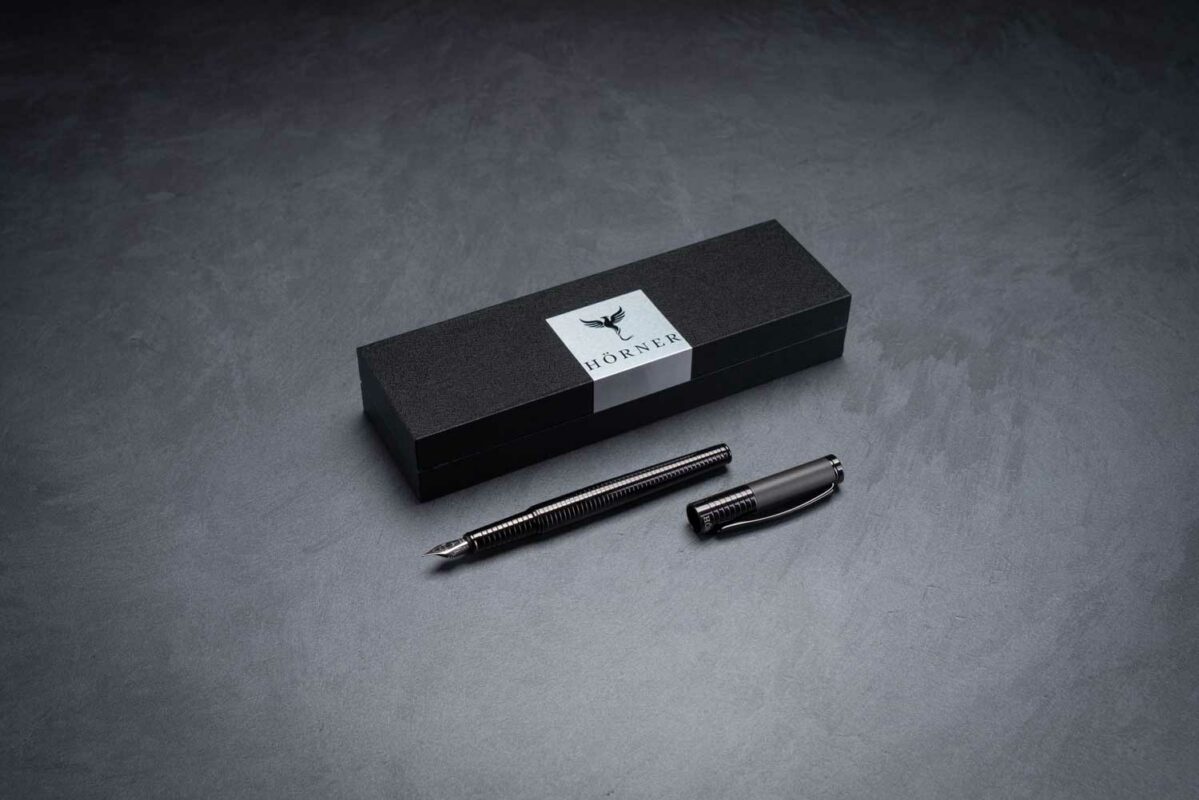
For a long time, gold had the edge — because of its durability
Fountain pen purists tend to give a clear answer to this question. For them, gold is the material of choice — above all for historical reasons. For a long time, gold nibs were considered the ultimate standard because gold was clearly superior to other materials.
This is due to the properties of the precious metal. Gold is exceptionally durable. Even acidic liquids do not really attack the material. At a time when iron gall ink was still very frequently used for writing, nibs required just such a resistant material. Had steel been used instead, the nibs would have become rusty over time and might even have developed tiny holes. Naturally, that was not desirable.
Stainless steel has long since become the equal of gold alloys
Today, there are numerous other inks that are far less aggressive. Materials science has also advanced considerably. Gold is no longer the only material that promises a long-lasting, pleasant writing experience. Even so, a large proportion of high-quality nibs continue to be made from gold.
However, steel has gained a strong market position and today matches gold in many respects when it comes to nibs. Stainless steel alloys have long been available that do not rust and continue to perform reliably even after years of intensive writing.
So does it ultimately no longer matter today whether you choose a gold nib or a steel nib?
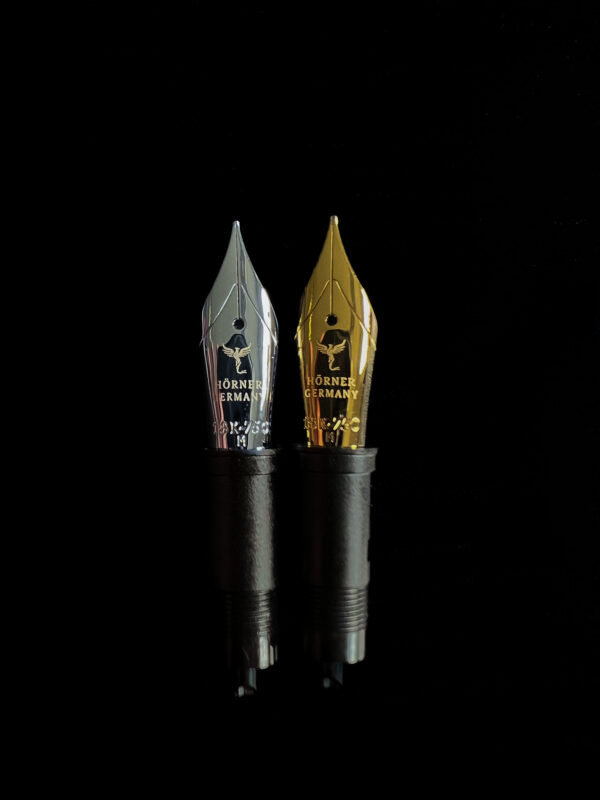
Gold nibs offer a soft writing feel
Yes and no.
Gold still retains the positive qualities that have always distinguished it. Nibs made from alloyed gold are extremely high-quality and durable. In addition, gold is a relatively flexible material and provides an exceptionally smooth writing experience. Anyone who owns several fountain pens with different nibs will confirm that, in terms of writing feel, a gold nib is ahead of a steel nib of comparable quality.
And beyond that, a gold nib naturally looks particularly elegant on a premium fountain pen — purely from a visual point of view.
However, gold nibs are also more expensive. If your budget is limited, your attention will automatically turn to steel nibs. We use these as standard for our elegant fountain pens. And do not worry: they too offer a writing experience that is genuinely impressive.
When writing, the tipping matters
When it comes to answering the question of gold, steel or even titanium, it is important to remember that writing is done with the nib tip, regardless of the material of the nib itself. And that tip is not made of gold, steel or titanium, but usually of a platinum-containing nickel alloy or iridium.
Why? Because the tip needs to be made of a material that is as hard as possible and resistant to wear. Even steel would not be hard enough in the long term and would wear down fairly quickly on paper. The same is even more true of gold, which is more easily shaped and softer.
Even more important than the material is the nib width
For all the pondering over the question of “gold or steel”, one further point is sometimes overlooked: other criteria also matter when writing. Above all, nib width. There is a world of difference in writing between fine F nibs and extra broad BB nibs. F nibs are ideal for those with a delicate hand who want to write letters or other longer texts, for example. Broad or extra broad nibs, by contrast, are generally less suitable for that purpose. They are more in the nature of signature nibs.
A good compromise is the M nib, which is medium in width and produces a clean, balanced script.
In our blog article “Nib guide from A to XF: which nib is right for your fountain pen”, we describe in detail the different nib widths available and the purposes for which they are best suited.
Precise finishing and regular care ensure a pleasant writing experience
Whether a nib writes cleanly and pleasantly also depends on how well it has been finished. If it has not been properly ground, it will scratch when writing — entirely regardless of the material. It can also happen that the two halves of a nib are not exactly the same length, which likewise results in scratchiness when writing.
And of course, gold and steel nibs alike need proper care. If fountain pens are not cleaned regularly, ink residue can build up, which impairs the writing feel.
Gold nibs are particularly interesting for frequent writers
But back once more to the original question: gold or steel. For most purposes, both types of nib are perfectly suitable. Frequent writers, however, tend to be interested in a nib that writes more softly — and that is generally the case with gold nibs.
Those who enjoy experimenting with different inks should also opt for a gold nib. They are less susceptible. Iron gall inks — as mentioned earlier — attack the material of the nib. Steel nibs can suffer from them, whereas gold nibs are more resistant.
Conclusion
Today, gold nibs and steel nibs are virtually equal in many respects when it comes to writing quality. Gold nibs stand out primarily for their softer writing feel, because gold is less hard than steel. The writing experience is more pleasant — and visually, a gold nib on a premium fountain pen naturally has more presence than a classic steel nib.
Manufacturers are, however, working diligently to make stainless steel nibs better and better. And there is no question that, in practice, they already deliver very good results.
Gold or steel: in the end, it is partly a matter of personal taste. Those who can afford it still tend to choose gold for the sake of the writing feel.
Stay fully up to date with our newsletter
And receive a 5% discount voucher for your order as a thank you
[cleverreach form=275818]