

Uncategorized
Farewell Gifts for Colleagues — Ideas for Every Occasion
In brief: A good farewell gift for a colleague depends on the occasion, the relationship, and the budget. This topic is more relevant than it might first appear: according to Haufe, using data from the Federal Statistical Office, the turnover rate in Germany in 2023 was between 30 and 34 per cent, and according to EY Work Reimagined 2024, 42 per cent of employees in Germany are considering a job change. At the same time, the market for personalised gifts is growing to 2.7 billion euros according to Roland DG / Produktionsleiter.today, with consumers paying an average of 13 per cent more for them. This guide shows you which gift ideas truly suit a job change, retirement, or parental leave — and which mistakes you should avoid.
A farewell in the office is rarely just a date in the calendar. It carries weight. You notice it in the conversations in the staff kitchen, at the half-emptied desk, in the last glance at the coat rack by the door.
That is precisely why a farewell gift should not look like something someone quickly ordered between two meetings. The most powerful gifts are almost never the loudest. They are the most fitting.
What we observe time and again: it is not necessarily the most expensive presents that remain in the memory, but those with a clear thought behind them. A letter with sincere sentences. A photo book with the right pictures. Or an object that one actually uses later.

Job change, retirement, parental leave — why the occasion matters
The occasion determines the gift. For a job change, practical companions for the new start usually fit best; for retirement, personal and appreciative mementos; for parental leave, warm, light gestures with a private touch. The budget framework also shifts: job change often £15 to £80, retirement £30 to £150, parental leave £15 to £60.
Not every farewell is the same. Someone moving to another company carries momentum. Someone entering retirement after decades often leaves behind an entire chapter of their life. Parental leave, on the other hand, is not a final farewell, but a break filled with anticipation, uncertainty, and many new routines.
The gift should respond to this. Otherwise, it feels interchangeable.
| Occasion | Emotional Context | Typical Budget Range |
|---|---|---|
| Job Change | New beginnings, recognition of collaboration | £15–£80 |
| Retirement | Gratitude, reflection, honouring a long career | £30–£150 |
| Parental Leave | Joy, care, personal gesture | £15–£60 |
| Internal Transfer | Connection, small token for daily use | £10–£40 |
| Executive Retirement | Official setting, high symbolic value | £50–£200 |
For retirement, things can become more personal. Often a bit more ceremonial. The Deutsche Handwerks-Zeitung explicitly recommends personal presence and a lead time of 4 to 6 weeks for farewells. This is not a minor detail. It shows that good farewells require preparation.
The case is different for a job change. Here, gifts that accompany the next step often work best: a good book, a thoughtful voucher, or a useful object for the new daily work routine. According to EY Work Reimagined 2024, 42 per cent of employees in Germany are thinking about a change. This explains why farewells in teams have long ceased to be an exception.
With parental leave, the tone is different. Softer. More relaxed. A gift here may certainly touch upon the private side more strongly.

Farewell gifts by budget
A budget creates clarity and prevents unease within the team. For small gestures, under £20 is often sufficient; for personal gifts, £20 to £50; for collective team gifts, £50 to £100. Higher amounts are primarily appropriate for retirement, pensioning, or very long-term collaboration.
A budget solves more problems than one might think. It avoids silent comparisons, takes the pressure out of the discussion, and makes the selection easier.
Under £20: Card plus a small token
In this range, it is the gesture that counts. Nothing more.
Suitable options include:
- Good quality chocolate or fine tea
- A small plant for the desk or home
- A beautiful notebook
- A high-quality card with personal lines from the team
The crucial point is the card. Three specific sentences beat almost any generic present. It is better to write: “We will miss your calm presence in the Monday meetings” than “All the best for the future”. The second is read; the first is remembered.
£20 to £50: Personal gift
Now it becomes more specific. In this range, you can find gifts that feel individual yet remain sensible.
Fitting choices are:
- A book related to the person or their new phase of life
- A voucher for a restaurant, bookshop, or cultural event
- A small gourmet hamper with coffee, wine, biscuits, or delicatessen
- A photo book with team memories
Here, a closer look pays off. Does the person drink the same espresso every morning? Have they been talking about a planned trip to Scandinavia for months? Do they constantly mention the herbs on their balcony? Such observations make the difference.
£50 to £100: The classic team gift
The most harmonious farewell gifts often emerge in this range. Enough scope for quality, but not yet an amount that makes the collection uncomfortable.
Good options include:
- An experience voucher
- A beautifully designed photo book plus a personal letter
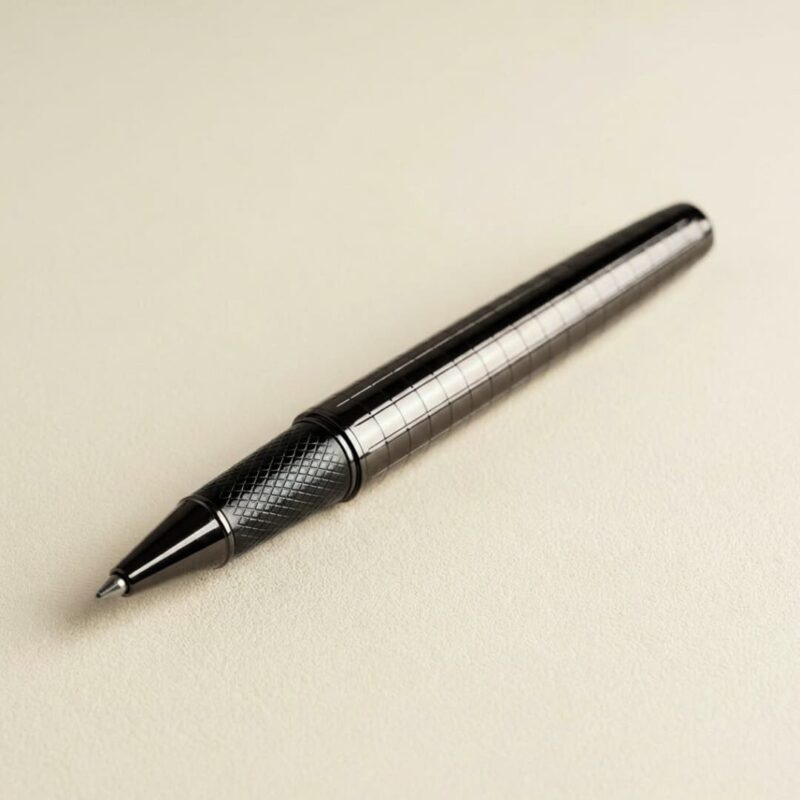
- A high-quality writing instrument with a subtle engraving
- A combination of a practical gift and a collective message
An engraved ballpoint pen can be particularly meaningful here — not as a status symbol, but as a companion for the new desk. You notice the difference immediately: the cooler metal in the hand, the clean click of the mechanism, the smoother line on the paper. Restraint is key. A name, initials, or a date is sufficient.
Over £100: Long-term collaboration
This budget suits special cases, such as retirement, pensioning, or close collaboration over many years.
In these instances, the gift may carry more weight:
- A shared experience with the team
- A set consisting of a memento and a personal letter
- A special object for the next stage of life
- For executives, a representative yet unobtrusive gift
At the same time, no one in the group should feel pressured. The HDE regularly points to continued consumer restraint. In a team context, therefore: a harmonious gift that everyone supports is better than an expensive one where two colleagues hesitate and no one speaks up.

9 ideas — from practical to personal
The best farewell gifts cover different types: experiences, homemade items, personal touches, practical tools, and small tokens of appreciation. This mix is crucial because not every colleague has the same interests, habits, or closeness to the team.
Diversity matters here. Not everyone appreciates decor. Not everyone likes vouchers. And not everyone wants something for their desk.
1. Experience instead of an object
A breakfast voucher, a night at the theatre, a brewing course, or a joint cooking class often stays in the memory longer than the next object on the shelf. Especially for people who already own everything they need.
Good for: Retirement, long-term collaboration, team farewells.
2. A book with genuine relevance
Not just any title from the station. Rather, a book that clearly fits the person: travel, gardening, biographies, humour, or a new phase of life. Add a dedication. Then even a simple hardcover gains depth.
Good for: Job changes, retirement, internal transfers.
3. A plant with symbolic power
This might sound unspectacular at first. Often, it isn’t. The fresh soil smells slightly damp, the leaves shine, and something living truly remains on the windowsill. A robust green plant or a small olive tree feels friendly, calm, and unobtrusive.
Good for: Parental leave, new starts, small team circles.
4. Voucher, but please make it specific
Vouchers are not automatically impersonal. They just shouldn’t be generic. A restaurant the person truly likes, a local bookshop, or a rail voucher for planned travels works significantly better than any general card.
Good for: All occasions, if preferences are known.
5. An engraved writing instrument
This is a classic. And for good reason.
Those who take many notes, sign documents, or lead meetings actually use a good pen. For this occasion, a high-quality writing instrument with engraving can be fitting, such as a metal ballpoint pen or an elegant fountain pen. The market for personalised gifts is growing to 2.7 billion euros according to Roland DG / Produktionsleiter.today, and consumers pay an average of 13 per cent more for personalised products. This shows: personalisation is not perceived as a gimmick, but as appreciation. For the engraving, the rule remains: less text, more impact.
6. Photo book with real moments
Don’t just take group photos from parties. The most powerful images are often the inconspicuous ones. The exhibition stand just before opening. The cake in the break room. The chaotic flipchart with crooked handwriting. It is precisely these pages that trigger memories later.
Good for: Retirement, team changes after long collaboration.
7. Donation in the colleague’s name
Some explicitly do not want anything material. In that case, a donation to an organisation that fits the person is a respectful solution. Include a card and explain the choice. Otherwise, the gesture remains too abstract.
Good for: Socially committed colleagues, reserved farewell cultures.
8. Gourmet hamper
Delicatessen, coffee, good tea, biscuits, or regional specialties almost always work. The selection is key. Better four things that are truly good than a basket with twelve random items in cellophane.
Good for: Smaller budgets, mixed teams, uncomplicated farewells.
9. Handwritten letter
The most personal gift costs almost nothing. And it is kept surprisingly often.
Our experience shows: especially with a gift for retirement or pensioning, a letter from the team is often the most moving part. Not polished. Not perfect. But specific. With sentences that fit only this person.

Organising a team collection — how to succeed
A good team collection starts early, specifies a clear amount, and distributes tasks. For official farewells, you should plan a lead time of 4 to 6 weeks; for smaller team farewells, at least a few working days. The clearer the responsibilities and payment methods, the more relaxed the organisation will be.
It is rarely the ideas that fail. It is more often the organisation.
1. Start early
Two days before, it becomes hectic. For small team gifts, a few working days are enough; for retirement or official farewells, significantly more. The Deutsche Handwerks-Zeitung recommends 4 to 6 weeks lead time. This is realistic, especially if photos, speeches, and contributions from several departments need to be gathered.
2. State a clear amount
Do not write: “Just give whatever you like.” This almost always leads to uncertainty. A suggestion is better, such as £5, £10, or £15 per person. Then everyone knows exactly where they stand.
3. Collect digitally
A chat history is rarely enough. Practical payment methods via bank transfer or a payment service with a fixed deadline are better. One person collects. A second keeps track. This prevents misunderstandings and awkward follow-ups on the last day.
4. Designate two people
One looks after the money, one after the card and gift. This distributes the workload. And it becomes apparent more quickly if signatures, pictures, or a contribution from management are still missing.
5. Consider the presentation
A gift without a proper moment falls flat. Plan five minutes for a small speech. In person is better than left wordlessly on the desk.
If gifts are processed through the company, you should also briefly check the tax side. Finanztip explains clearly which rules apply to non-cash benefits and specific occasions. This saves queries to HR or accounting.
What you should NOT give
Inappropriate gifts are those that are too private, too expensive, ironic, or recognisably thoughtless. A good farewell gift honours the person. It does not comment on them, does not lecture them, and does not embarrass anyone in the team.
A farewell gift can go wrong. Usually not out of malice, but out of thoughtlessness.
Avoid:
- Gifts that are too private, if the relationship was rather distant
- Joke gifts at the person’s expense
- Decoration without relevance, which only gathers dust
- Gifts with hidden criticism, such as guides on organisation, stress, or career
- Excessively high amounts that cause unease within the team
- Presents unrelated to the occasion, such as baby equipment for a simple job change
Very formal business gifts without any personal connection are also tricky. A conference folder can certainly be appropriate — for example, when moving to a position with many external appointments, presentations, or client contact. Without a recognisable connection, however, it remains a neutral object. Nothing more.
The worst-performing presents are those where everyone in the room immediately senses: this was decided yesterday in a rush.
FAQ
What is a good farewell gift for a colleague?
A good gift fits the occasion, the relationship, and the budget. Personal yet practical ideas like photo books, books, vouchers, gourmet hampers, or a subtly personalised writing instrument work particularly well.
How much should one give for a team farewell gift?
In many teams, £5 to £15 per person is a good range. Depending on the team size, this usually results in £20 to £100 for a collective gift.
What do you give for retirement?
More personal gifts are appropriate for retirement than for a job change: photo books, experiences, handwritten letters, gourmet hampers, or a memento with an engraving.
Is a voucher impersonal as a farewell gift?
Only if it is chosen arbitrarily. A voucher for a favourite restaurant, a bookshop, or a specific activity feels significantly more personal than a general card.
When is an engraved pen a good idea?
If the person enjoys writing, taking notes, or signing documents professionally or privately. In that case, a personalised pen is not a symbolic gift, but an object for everyday use.